Author: Grumpy100

  • The Silent Game of Meeting Attendance Chicken Everyone Plays But Nobody Admits

    You know that meeting attendance chicken game where everyone suddenly becomes very, very busy exactly 30 seconds before a 10+ person meeting is supposed to start? Yeah, that one. The one nobody talks about but everybody plays.

    Long tables with black chairs in a large meeting room. Original public domain image from Wikimedia Commons

    It’s 2:59 PM. Your calendar dings with that cheerful little notification that makes your stomach drop: “Meeting starts in 1 minute.” You look at the attendee list. Twelve people. You do the math in your head. If twelve people are invited, maybe six will show up. If you’re one of the first three to join, the odds of having to actually contribute skyrocket. If you’re lucky and join seventh or eighth, you can probably ride this meeting out in blissful silence with your camera off and your microphone muted, occasionally nodding at nothing.

    But here’s the thing: everyone else is doing the exact same calculation.

    The Strategic Late Arrival

    There’s an unspoken art to joining a large meeting “fashionably late” without it being so late that someone notices. The sweet spot is somewhere between 2-4 minutes after the official start time. Early enough that the meeting hasn’t really gotten going yet, late enough that you’re definitely not going to be voluntold to take notes or “kick us off.”

    The beauty of the 2-4 minute delay is that it comes with a built-in excuse library:

    • “Sorry, I was on another call that ran over”
    • “Sorry, had to step away for a second”
    • “Sorry, Teams was acting weird”
    • Or the classic non-apology: silence plus immediately going on mute

    Nobody questions it. Nobody can question it, because they were playing the exact same game.

    The Waiting Room Standoff

    Virtual meetings have added a delicious new dimension to meeting attendance chicken: the waiting room standoff. You join the meeting, you see you’re in the waiting room, and you notice there are two other participants also waiting.

    Now the game becomes: do you leave and rejoin in 60 seconds, hoping that someone else will have been admitted by then? Do you just sit there, accepting your fate as a potential early joiner? Do you send a chat message to the organizer who definitely isn’t paying attention to the waiting room because they’re also hoping someone else joins first?

    I’ve seen waiting rooms with seven people in them while the actual meeting room sits empty except for the organizer, who is frantically refreshing their email and pretending they can’t see the growing crowd of digital loiterers outside their virtual door.

    The Camera Conundrum

    The meeting starts. Six brave souls (or six people who got trapped joining early) are sitting there with their cameras on, staring at each other in a Brady Bunch grid of awkwardness. The meeting organizer is trying to make small talk while nervously glancing at the participant count, which is ticking up one person every 45 seconds.

    Then someone joins with their camera off. Then another. Then three more in rapid succession, all camera-off. Now the early joiners are stuck. Do they turn their cameras off and look like they’re bailing on the meeting? Do they keep them on and look like try-hards? The meeting organizer, feeling the silent pressure, makes a weak attempt: “Feel free to turn your cameras on if you’d like!”

    Nobody does.

    The Mute-Olympics

    Joining late grants you the precious gift of the muted entrance. You can slip into a meeting like a ninja, your name appearing in the participant list with all the fanfare of a whisper. The early joiners didn’t have this luxury. They joined when the room was quiet, when every microphone activation sounded like a foghorn, when the organizer was still hopeful enough to greet people by name.

    “Oh hey Sarah! Good to see you! And there’s Marcus! How was your weekend, Marcus?”

    Marcus had to answer. Marcus had to engage. Marcus made small talk about his weekend for 90 seconds while eight other people were waiting in the hallway, synchronizing their watches, preparing to execute the perfect late-but-not-too-late entrance.

    By the time the meeting actually starts, Marcus is exhausted from carrying the entire pre-meeting conversation, and the late joiners are sitting pretty, cameras off, mics muted, ready to contribute absolutely nothing for the next 60 minutes.

    The Peak Late-Join

    There exists a theoretical perfect moment for joining a meeting that I call the “Peak Late-Join.” This is the moment when:

    • The meeting has officially started
    • The organizer has given up waiting for more people
    • They’ve moved past introductions
    • They haven’t yet gotten to anything of substance
    • Nobody is keeping track of who just joined

    The Peak Late-Join typically occurs somewhere between 4-7 minutes after the scheduled start time, depending on the organizer’s patience level and the corporate culture around punctuality. Join at Peak Late-Join and you’ve achieved meeting attendance nirvana: you’re here, you’re technically not late, and there’s absolutely zero chance you’re getting voluntold to do anything.

    The Participation Probability Matrix

    Let’s be honest about the math here. In a 12-person meeting:

    • Join in the first minute: 80% chance you’ll have to actively participate
    • Join in minutes 2-4: 45% chance of participation
    • Join at minutes 5-6: 20% chance of participation
    • Join at minute 7+: 15% chance anyone remembers you’re there

    The truly advanced players have spreadsheets. They’ve calculated the optimal join time for every recurring meeting on their calendar. They know that the Monday morning team sync doesn’t really start until minute 8 because Brad is always late. They know that the Friday afternoon retro has a critical mass threshold of 6 people before it kicks off. They know exactly when to maximize their presence credit while minimizing their participation liability.

    The Organizer’s Dilemma

    Spare a thought for the meeting organizer, sitting there at 2:59 PM, watching their nice neat 3:00 PM start time approach like a freight train. They’ve got their agenda ready. They’ve got their slides loaded. They’ve got their talking points memorized.

    2:59 PM: One person in the meeting (them) 3:00 PM: Two people in the meeting 3:01 PM: Two people in the meeting 3:02 PM: Four people in the meeting 3:03 PM: Six people in the meeting 3:04 PM: Nine people in the meeting 3:05 PM: Nine people in the meeting 3:06 PM: Eleven people in the meeting

    Do they start at 3:00 when only two people are there and then have to recap everything five times as people trickle in? Do they wait until 3:06 and look like they can’t manage a schedule? Do they passive-aggressively say “okay, let’s get started” at 3:02 when the room is still half-empty?

    The organizer is playing their own game of chicken: “Who cracks first, me or the absent attendees?”

    Spoiler alert: the organizer always cracks first.

    The Post-Meeting Guilt

    After successfully executing a flawless late join, spending 55 minutes on mute with your camera off, and contributing exactly zero words to the conversation, you’ll feel a tiny pang of guilt. A whisper in the back of your mind asking “should I have participated more?”

    This guilt lasts approximately 12 seconds, until your calendar dings again.

    “Meeting starts in 1 minute.”

    And the game begins anew.

    The Unspoken Rules

    Like any good game of chicken, meeting attendance chicken has rules that everyone follows but nobody acknowledges:

    1. Never call out the late joiners (you’ll be one next time)
    2. Never join a meeting early enough to be alone with the organizer
    3. If you join late, apologize once and then never speak again
    4. The first person to join bears the conversation burden until person number three arrives
    5. Camera-off is acceptable after the 5-minute mark
    6. Nobody tracks attendance in a 10+ person meeting anyway

    The Future of Meeting Chicken

    As we’ve settled into this remote and hybrid work world, meeting attendance chicken has evolved from an occasional tactic into a full-blown strategic discipline. Some companies have tried to fight it with “cameras on” policies or “must join on time” rules, but these are the flailings of a dying regime. You cannot stop meeting attendance chicken any more than you can stop the tide.

    The game is eternal. The game is inevitable. The game is happening right now in a conference room (virtual or physical) near you.

    Someone is looking at their clock. Someone is doing the math. Someone is waiting just one more minute before they click that “Join” button.

    And somewhere, a meeting organizer is sitting alone in a virtual room, wondering where everybody is, knowing full well that everyone is out there, together, waiting for everyone else to go first.


    Have your own meeting attendance chicken stories? Of course you do. We all do. Because we’re all playing the same game, hoping nobody notices we’re playing, while simultaneously knowing that everyone else is playing too.

    Just remember: the only winning move is to join late enough that nobody expects anything from you, but not so late that anyone notices you joined late. It’s a delicate balance. An art form, really.

    Good luck out there. May your joins be strategically timed and your participation be mercifully minimal.

  • The AI Code Generation Technical Debt Crisis Nobody Sees Coming

    photo of minified JavaScript code

    slams coffee mug on desk

    Oh PERFECT. You know what’s going to be absolutely chef’s kiss hilarious in about 18 months? When we’re all drowning in an ocean of plausible-looking garbage code that nobody understands because it was generated by someone who thought “well the AI wrote it so it must be good!”

    You know what I saw yesterday? YESTERDAY? A simple change in dependencies (e.g., removing one) turned into a 1000+ line refactor of tests, probably because the linter complained about syntax and someone asked Claude to “fix the style problem.”

    Why are AI PRs so big???

    And here’s the thing that makes me want to scream into the void: the Dunning-Kruger effect is about to go NUCLEAR. The people who are most blown away by AI code are the exact same people who can’t evaluate whether it’s actually any good. They don’t know what “good” even looks like! They just know it compiles and maybe passes the happy path test they wrote. This isn’t a judgment… it’s self-awareness: I’ve noticed myself amazed at Claude’s ability to write languages that I’m not great in, and I find myself in awe at how well it works. Ok, except if it’s PowerShell. I don’t know PowerShell all that well and I can tell that most LLMs don’t either, mainly because I watch it getting basic syntax wrong and spending multiple iterations trying to fix it.

    Meanwhile, (back in the language I know well) I’m sitting here thinking “I could write this function in 10 minutes” but instead I’m watching someone spend 45 minutes arguing with ChatGPT, getting five different implementations that each solve slightly different problems, copying bits from each one, and ending up with some Frankenstein monster that technically works but has the architectural elegance of a highway pile-up.

    The expert devs? We’re MAYBE getting a 20% speedup on boilerplate, if that. Because guess what – for anything actually complex, the time isn’t in typing, it’s in thinking! It’s in understanding the problem! And the LLM doesn’t understand ANYTHING. So you end up explaining the problem to the AI, then fixing what it gives you, and congratulations, you’ve just added a slow, mediocre middleman to your development process.

    But the devs who don’t really understand the domain? Oh, they’re FLYING now. They’re 10x faster! They’re shipping features! Never mind that every single one is a ticking time bomb of technical debt that nobody can maintain because the code doesn’t follow any of our patterns, uses deprecated APIs the LLM learned from 2019 StackOverflow posts, and has this absolutely DELIGHTFUL habit of working fine until you hit an edge case, at which point it fails in ways that make no sense because the underlying logic is fundamentally flawed. (Also, why did you use create-react-app? Even *I* know that that’s been deprecated. Its own says that much.)

    And you can’t even review it properly because there’s SO MUCH of it! “Please review my 500-line PR” – oh cool, did you write this or did a robot? Do YOU even understand what it does? Can you explain why it’s using a WeakHashMap here? No? GREAT. AWESOME. LOVE THAT FOR US.

    The worst part? MANAGEMENT LOVES IT. “Look how much faster we’re shipping!” Yeah, we’re shipping, all right. Shipping technical debt at unprecedented velocity. We’re going to be maintaining this garbage for YEARS. Every bug fix is going to be an archaeological expedition trying to figure out what the original generated code was even attempting to do.

    And when something breaks in production – and OH IT WILL – nobody’s going to understand it well enough to fix it quickly. We’ll just… generate more code to patch around it. Code on top of code on top of code, like geological layers of sedimentary garbage accumulating over time.

    Five years from now, we’re all going to be sitting in a “legacy code cleanup” initiative wondering how everything got so incomprehensible so fast.

    But sure, yeah, AI is making us all 10x developers. Can’t wait.

    returns to actually reading the codebase like some kind of dinosaur

  • Building Fast in the Wrong Direction: An AI Productivity Fairy Tale

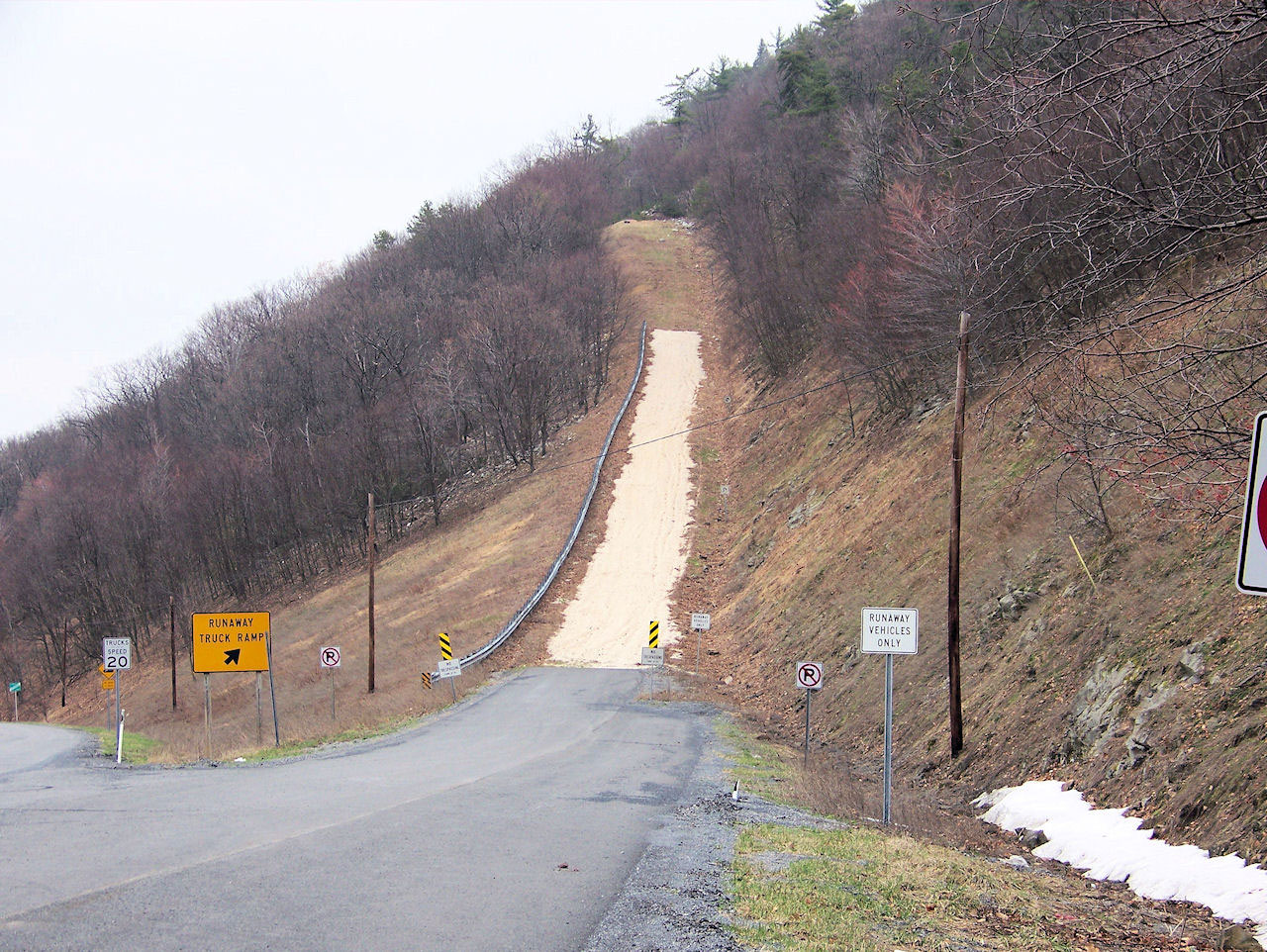
    Oh good, another breathless LinkedIn post about how AI just 10x’d someone’s development velocity. Fantastic. You know what else moves fast? A semi truck in the mountains of Tennessee with brakes that have failed. Speed is great until you realize your only hope for survival is a runaway truck ramp.

    Runaway Truck Ramp
    Runaway Truck Ramp image from public domain pictures

    Here’s the thing nobody wants to admit at their AI productivity [ahem… self-congratulatory gathering]: AI doesn’t matter if you don’t have a clue what to build.

    I’ve watched teams use ChatGPT to crank out five different implementations of features nobody wanted in the time it used to take them to build one feature nobody wanted. Congratulations, you’ve quintupled your output of garbage. Your CEO must be so proud. Maybe you can have ChatGPT restyle your resume to look like VS Code or the AWS Console, but it’s not going to change the experience you have listed on it.

    Going fast in the wrong direction gets you to the wrong place faster. But it’s still the wrong place. You’re just confidently incorrect at scale now.

    Agile Saves You From Your Own Stupidity (Sometimes)

    You know why Agile actually works when it works? Not because of the stand-ups or the poker planning or whatever cult ritual your scrum master insists on. It works because it forces you to pause every couple weeks and ask “wait, is this actually the right thing?”

    Short iterations exist to limit the blast radius of your terrible decisions. When you inevitably realize you’ve been building the wrong thing, you’ve only wasted two weeks instead of six months. It’s damage control, not strategy.

    But sure, let’s use AI to speedrun through our sprints so we can discover we built the wrong thing in three days instead of ten. Efficiency!

    Product Strategy: The Thing You Skipped

    Here’s a wild idea: what if you actually figured out what to build before you built it?

    I know, I know. Product strategy and user research are boring. They don’t give you that dopamine hit of shipping code. They require talking to actual users, which is terrifying because they might tell you your brilliant idea is stupid.

    But you know what product strategy and research actually do? They narrow down your options. They give you constraints. They help you make informed bets instead of random guesses.

    Because here’s the math that AI evangelists keep missing: Improving your odds of success by building the right thing will always beat building the wrong things 10 times faster.

    Building the wrong feature in three days instead of two weeks doesn’t make you 5x more productive. It makes you 5x more wrong. You’ve just accelerated your march into irrelevance.

    AI as a Validation Tool, Not a Strategy Replacement

    Now, I’m not saying AI is useless. It’s actually pretty good at helping you validate ideas faster. Rapid prototyping, quick mockups, testing assumptions—yeah, that stuff is genuinely helpful.

    But AI can’t tell you what to validate. It can’t tell you which customer problem is worth solving. It can’t tell you if your market actually exists or if you’re just building another solution in search of a problem.

    That still requires thinking. Remember thinking? That thing we used to do before we decided to outsource our brains to autocomplete?

    The Uncomfortable Truth

    The dirty secret of software development has always been that most of our productivity problems aren’t technical. (See the reprint of the “No Silver Bullet” essay from 1986 in a collection of timeless project managements essays, The Mythical Man-Month) They’re strategic. We build the wrong things, for the wrong reasons, at the wrong time. (Ok, yes, they’re also communication and coordination problems… fortunately, we have Slack for that <insert eye roll emoji here>)

    AI speeds up the building part. Great. But if you’re speeding toward the wrong destination, you’re just failing faster.

    Maybe instead of celebrating how quickly you can ship features, you should figure out which features are worth shipping in the first place. Crazy thought, I know.

    But hey, what do I know? I’m just a grumpy coworker who thinks you should know where you’re going before you hit the gas.


    Now get back to work. And for the love of god, talk to your users and other humans instead of spending all day chatting with a chatbot that declares you a deity when you correct it.